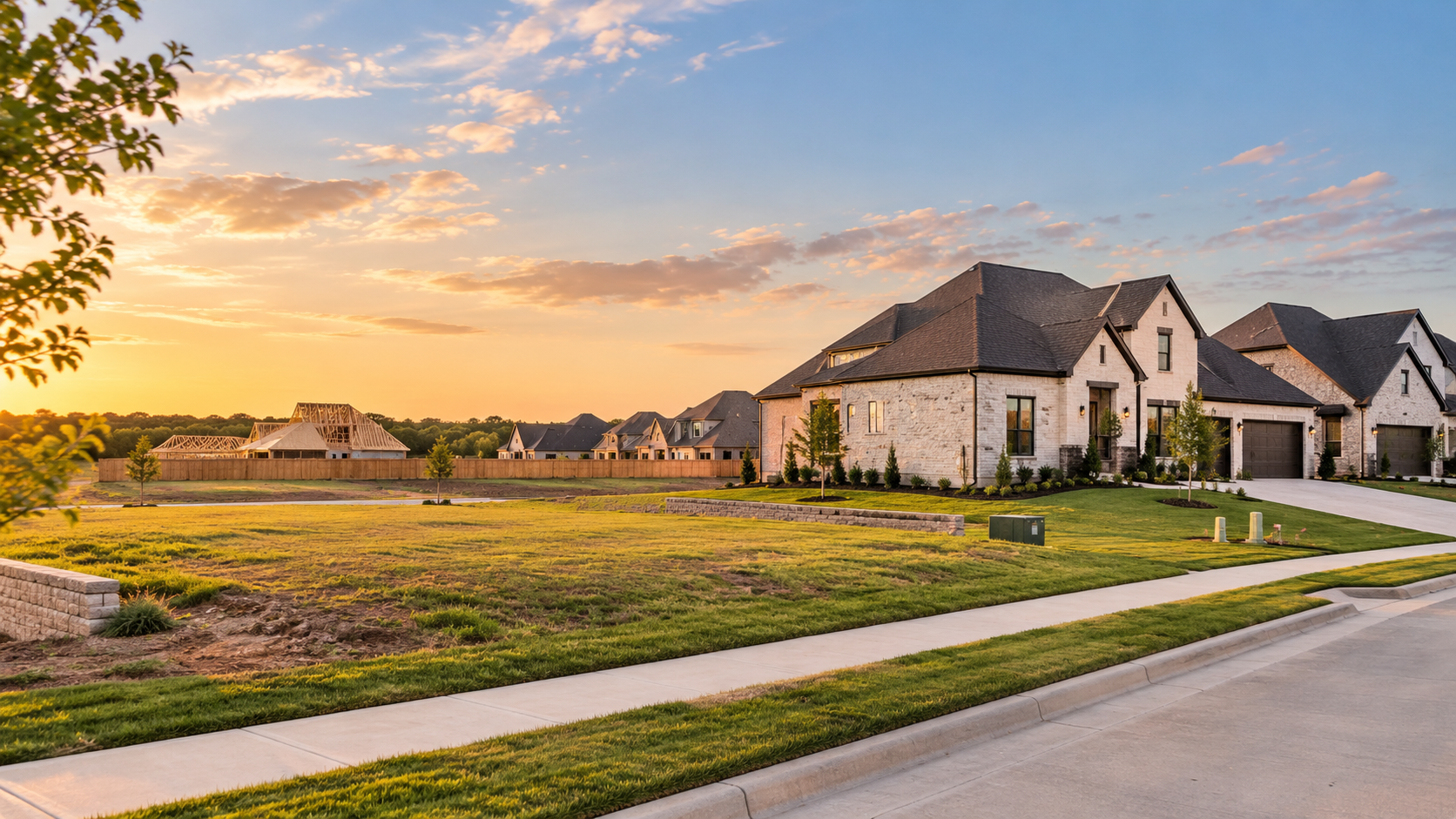
When you’re buying a new construction home in Midlothian or Burleson, choosing the floor plan is only part of the decision. The lot you build on can have just as much impact on how much you enjoy your home.
Maybe you’ve found a corner lot with a bigger backyard, a homesite backing up to open land, or a cul-de-sac lot that seems perfect. Then the builder tells you there’s an additional lot premium.
Is paying extra for that particular lot actually worth it?
Quick Answer: A new construction lot premium can be worth paying when the location, usable yard space, privacy, or other features provide meaningful value to you. But a higher lot premium doesn’t automatically mean better resale value. Before choosing a lot in Midlothian or Burleson, review the site plan, drainage, easements, orientation, nearby development, and total purchase price.
What Is a Lot Premium in New Construction?
A lot premium is an additional amount a builder charges for a particular homesite within a community. It’s typically separate from the advertised base price of the home.
For example, imagine a builder advertises a floor plan starting at $400,000. One available lot has no premium, while another has a $15,000 premium because it’s larger or located on a cul-de-sac.
If you select the second lot, your starting price becomes $415,000 before any additional upgrades or other charges.
Lot premiums vary by builder, community, availability, and perceived desirability. There isn’t one standard premium that applies across Midlothian or Burleson.
Why Do Builders Charge More for Certain Lots?
Builders may charge additional amounts for lots they believe buyers will find more desirable. Common examples include:
- Corner or cul-de-sac locations
- Larger lots or wider backyards
- Homesites backing up to green space or open land
- Lots with fewer immediate rear neighbors
- Locations near community amenities
- Lots that accommodate particular floor plans or garage configurations
But here’s something I always want buyers to remember: just because a builder assigns a premium to a lot doesn’t necessarily mean that premium will be recovered when you eventually sell.
The value of those features depends on the specific property, comparable sales, and what future buyers are willing to pay.
7 Things to Check Before Choosing Your New Construction Lot
1. Look Beyond the Lot’s Square Footage
A larger lot sounds great, but how much of that space will actually be usable?
Two lots can have similar square footage and completely different backyard layouts. One might have a wide, relatively flat yard, while another is narrow, irregularly shaped, or slopes significantly.
Think about how you plan to use the space. Do you want room for dogs, a play area, a garden, a covered patio, or possibly a pool someday?
Ask for the lot dimensions and site plan rather than relying only on the total square footage.
2. Pay Attention to Drainage and Elevation
Drainage is one of the most important things to investigate when selecting a homesite, especially when you’re looking at a lot with a noticeable slope.
Look at where rainwater is expected to flow, whether there are drainage swales or easements, and how neighboring lots will be graded.
A backyard that looks relatively flat during construction may look different after final grading, fences, landscaping, and neighboring homes are completed.
Ask the builder for the grading or drainage plan when available, and consider consulting an appropriate professional if you have concerns.
You can also review floodplain information through official mapping resources, but remember that properties outside mapped high-risk flood zones can still experience flooding.
3. Understand Easements and Building Setbacks
Before paying extra for a larger backyard, find out whether portions of that yard are affected by utility easements, drainage easements, or building setbacks.
An easement may limit where you can install certain structures or improvements. Setbacks and deed restrictions can also affect plans for patios, pools, sheds, or other additions.
That doesn’t necessarily make a lot a bad choice. It just means you need to understand what you’re purchasing.
The Texas Real Estate Research Center recommends carefully reviewing surveys, recorded easements, and property restrictions before making land-related decisions.
4. Consider Which Direction the Backyard Faces
In North Texas, the direction your backyard faces can make a noticeable difference in how you experience your outdoor space.
For example, a west-facing backyard may receive more direct afternoon sun during hot summer months. A different orientation may provide more shade during the times you expect to use your patio.
Neither is automatically better. It depends on your preferences, home design, shade structures, and landscaping.
If possible, visit the lot at different times of day before making your decision.
5. Find Out What’s Planned Behind the Property
This is a big one, especially in growing communities throughout Midlothian and Burleson.
A lot that currently backs up to an open field may feel incredibly private. But what happens if that land is eventually developed?
Before paying a premium for a particular view or location, research nearby zoning, proposed development, and available planning documents.
The City of Midlothian Planning and Zoning Department provides access to development information and an interactive planning cases map.
The City of Burleson Maps page includes interactive development, zoning, and other mapping resources.
These resources can help you investigate what’s currently proposed or approved, but future land uses and development plans can change. No map can guarantee that a particular view will remain unchanged.
6. Think About Traffic, Parking, and Everyday Convenience
Lot location within the neighborhood matters, too.
A home near the community entrance may offer convenient access but could experience more passing traffic. A cul-de-sac might have less through traffic, but the driveway layout and available street parking still deserve a closer look.
Also consider whether the lot is near a playground, pool, mailbox cluster, walking trail, or other community feature.
Some buyers love being close to amenities. Others would rather have a quieter location farther away.
7. Evaluate the Total Price, Not Just the Premium
It’s easy to focus on a $10,000 or $20,000 lot premium without considering the complete purchase price.
Remember to account for the base price, lot premium, structural options, design selections, and any other charges included in the builder’s pricing.
Then compare the total with other available homesites, inventory homes, and relevant resale properties.
Depending on the builder and community, there may be opportunities to discuss incentives or pricing. However, lot premiums and concessions are not guaranteed to be negotiable.
Is a More Expensive Lot Always the Better Choice?
Not necessarily. Here’s a simple way to compare different homesites.
| Lot Feature | Potential Benefit | What to Verify |
|---|---|---|
| Larger backyard | More outdoor space | Usable area, slope, easements |
| Cul-de-sac | Potentially less through traffic | Driveway layout, parking, lot shape |
| Corner lot | Different layout and possible side-yard space | Setbacks, sidewalks, maintenance |
| Greenbelt or open view | Potential privacy and scenery | Ownership, restrictions, future development |
| Near amenities | Convenient access | Noise, traffic, activity levels |
The best lot isn’t necessarily the one with the highest premium. It’s the one that works for your priorities, your budget, and your plans for the property.
Does a Lot Premium Increase Resale Value?
Some lot characteristics may make a home more appealing to future buyers. But it’s important to separate what a builder charges today from what the resale market may support later.
For example, buyers may value a spacious backyard or additional privacy, but that doesn’t mean every dollar of the original lot premium will translate into additional resale value.
An appraisal also considers market evidence and comparable properties. The amount you paid for a lot premium doesn’t automatically establish its current market value.
If resale is an important consideration, ask your real estate agent to evaluate comparable properties and how buyers in that specific community have responded to different lot characteristics.
What Should Buyers Research in Midlothian and Burleson?
Both cities have experienced development activity, which makes it especially important to investigate the surroundings of a potential homesite.
Choosing a Lot in Midlothian
Before selecting a new construction lot in Midlothian, consider reviewing the city’s planning cases map, zoning information, and subdivision documents.
The Midlothian Maps and GIS resources provide access to mapping information that can help buyers better understand surrounding parcels and development patterns.
Choosing a Lot in Burleson
In Burleson, the city’s interactive maps can help you explore zoning, development projects, and other local information.
For concerns involving grading or drainage, the Burleson Engineering Department provides information about infrastructure review and floodplain resources.
Keep in mind that municipal boundaries, school district boundaries, and mailing addresses don’t always match. Verify the details for the specific lot instead of assuming every home with a Midlothian or Burleson address has the same services or school assignment.
Questions to Ask Before Paying a Lot Premium
Lot Selection Checklist
- What is the exact lot premium, and is it included in the quoted purchase price?
- Can I review the lot dimensions and site plan?
- Where are the drainage and utility easements?
- What will the final grading look like?
- Are there restrictions on pools, fences, patios, or outbuildings?
- Who owns the land behind or beside the lot?
- Are there proposed or approved developments nearby?
- Does the builder allow independent inspections?
- What happens to my deposit if I change lots or cancel?
- How does this lot compare with other available homesites?
Before signing, review the builder’s actual contract and lot-selection documents. Deposit terms, changes, deadlines, and buyer protections depend on the agreement.
For additional questions about builder contracts, see my guide on what to ask before signing a new construction contract in DFW.
New Construction Lot Premium FAQs
Can you negotiate a lot premium with a builder?
Sometimes. It depends on the builder, community, demand, available inventory, and current incentives. Some builders may be more flexible with other concessions than with the lot premium itself.
Is a cul-de-sac lot worth paying more for?
It can be if you value its location, lot configuration, or reduced through traffic. However, cul-de-sac lots vary in size, shape, parking, and usable outdoor space. Evaluate the individual lot rather than assuming every cul-de-sac is better.
Will I get my lot premium back when I sell?
Not necessarily. Future resale value depends on market conditions, comparable sales, property condition, buyer preferences, and the specific lot features. The original premium is not a guaranteed return on investment.
Should I choose my lot before selecting a floor plan?
It’s best to evaluate them together. Not every floor plan or elevation will fit every homesite, and lot characteristics may affect the layout, garage placement, yard size, and available options.
Can I use my own real estate agent when buying new construction?
Generally, yes, subject to the builder’s registration and representation policies. It’s best to discuss representation before your first visit to a builder’s sales office, because some builders have specific requirements for agent involvement.
Final Thoughts: Choose the Lot That Fits Your Life
When buying new construction in Midlothian or Burleson, it’s easy to get caught up in floor plans, finishes, and builder incentives. But the homesite is one part of the property you can’t simply change after closing.
Take the time to understand what you’re paying for, what limitations may exist, and how the lot fits your long-term plans.
Sometimes paying more for the right lot makes sense. Other times, a standard lot may give you everything you need without increasing your purchase price.
BUYING NEW CONSTRUCTION IN DFW?
Let’s Find the Right Home and the Right Lot
Whether you’re exploring builders in Midlothian, Burleson, Mansfield, or surrounding DFW communities, I’d love to help you compare your options and understand what you’re buying before you commit.
Helpful Resources
This article is for general informational purposes only and does not constitute legal, tax, engineering, surveying, or financial advice. Builder contracts, lot restrictions, development plans, and property conditions vary. Buyers should review applicable documents and consult qualified professionals when appropriate. Equal Housing Opportunity.